
The Unexpected Animal Making Community Solar More Sustainable
.png)

.png)
March 31, 2026
On a sunny Colorado afternoon, sheep move quietly beneath rows of solar panels, grazing in the shade and bringing unexpected life to the landscape. It’s not a scene most people associate with renewable energy, but for fifth-generation rancher Tom Brown, it’s become commonplace.
.jpg)
Photo: Tom Brown and his family stand at the intersection of farming and clean energy.
Tom partners with community solar companies like Nautilus Solar Energy to tell a different story: one where farming and solar power coexist.
This practice, known as solar grazing, is an example of agrivoltaics, or the intentional pairing of agriculture and solar energy production. Rather than taking land “out of production,” Tom sees solar sites as an opportunity to raise livestock more economically.
A Flock Built for the Job
Tom began solar grazing after recognizing the financial and operational benefits of leasing sheep to solar farms. Today, he manages around 1,800 ewes and farms more than 300 acres of land each year.
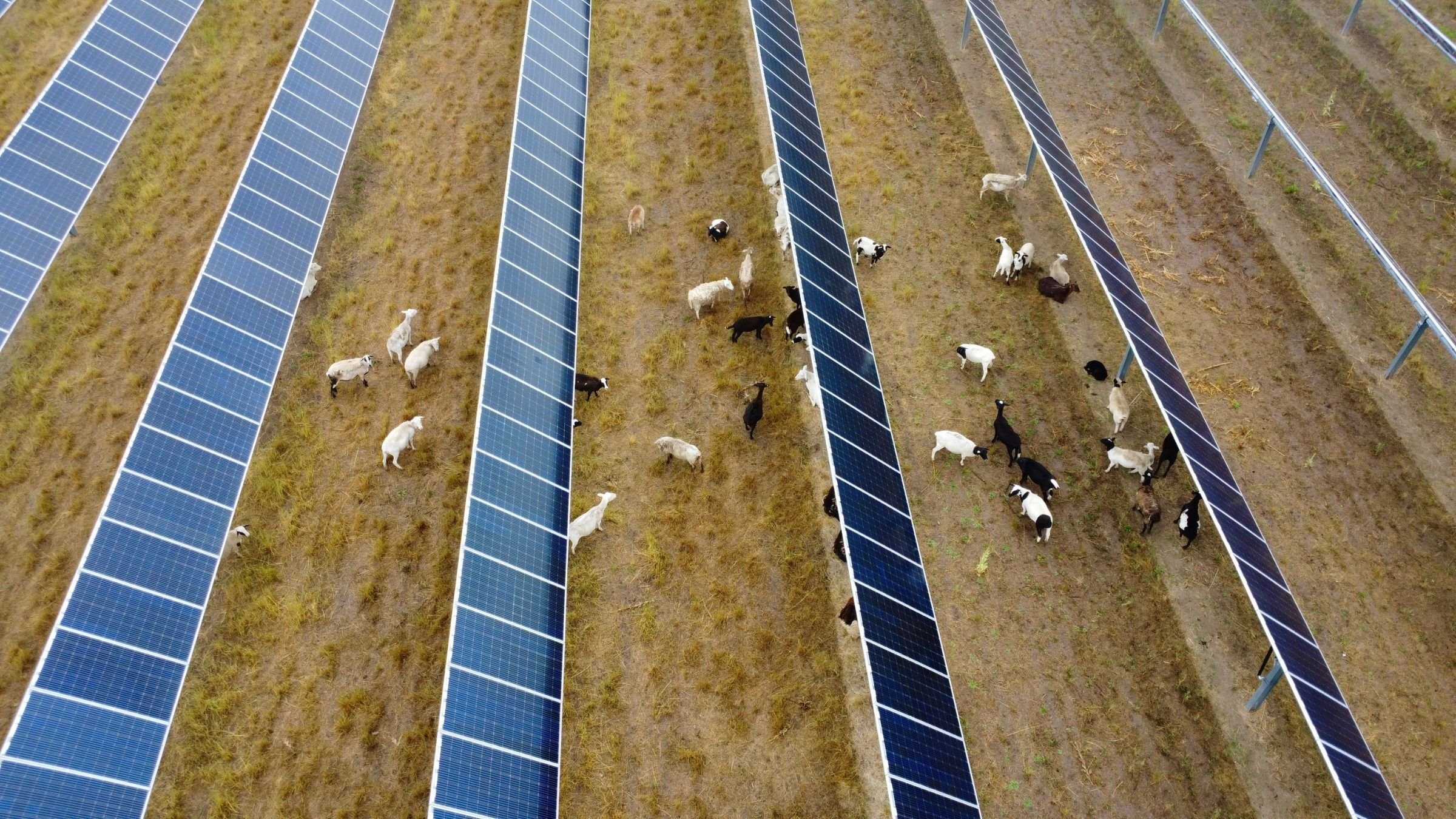
Photo: Sheep grazing under the solar panels at a solar farm in Platteville, Colorado.
In Colorado, the grazing season typically runs from around May through October. Tom stocks about three sheep per acre of land, meaning a 10-acre farm can support at least 30–40 sheep!
Unlike the idea of animals turned loose in one pasture all season, solar grazing requires a little more hands-on management. “We rotate them depending on the vegetation,” Tom explains. Once vegetation is grazed down at one site, the flock moves to another solar farm and returns once the land recovers. Water access is also critical, which means Tom checks on the flock almost daily.
Why Sheep?
Solar grazing with goats, cows, pigs, and horses have been tried, but these larger animals can damage panels or, in the case of goats, chew on wiring.
In contrast, sheep turn out to be a surprisingly good solar farm maintenance team:
- Their light hooves reduce soil compaction.
- They can safely graze under panels
- They can utilize the shade under the panels.
- Their grazing can improve land soil quality.
- They help target problem plants while keeping overall vegetation at a manageable height.
- Unlike mowing throughout the year, sheep provide steady, low-noise maintenance.
Of course, sheep are animals, and mischief can happen. Panels can get damaged and wires pulled, but in Tom’s experience, the risk of damage is lower with sheep than with heavy mowing equipment and the sheep do all the work without fuel or noise.
While solar grazing provides many benefits, it is not without some debate.
Agriculture Doesn’t Disappear. It Changes.
Solar development can sometimes be a sensitive topic in agricultural communities, and Tom doesn’t shy away from that reality. Concerns about losing productive farmland are real, especially when high-value land is involved. Still, Tom sees opportunities for the land to remain productive.
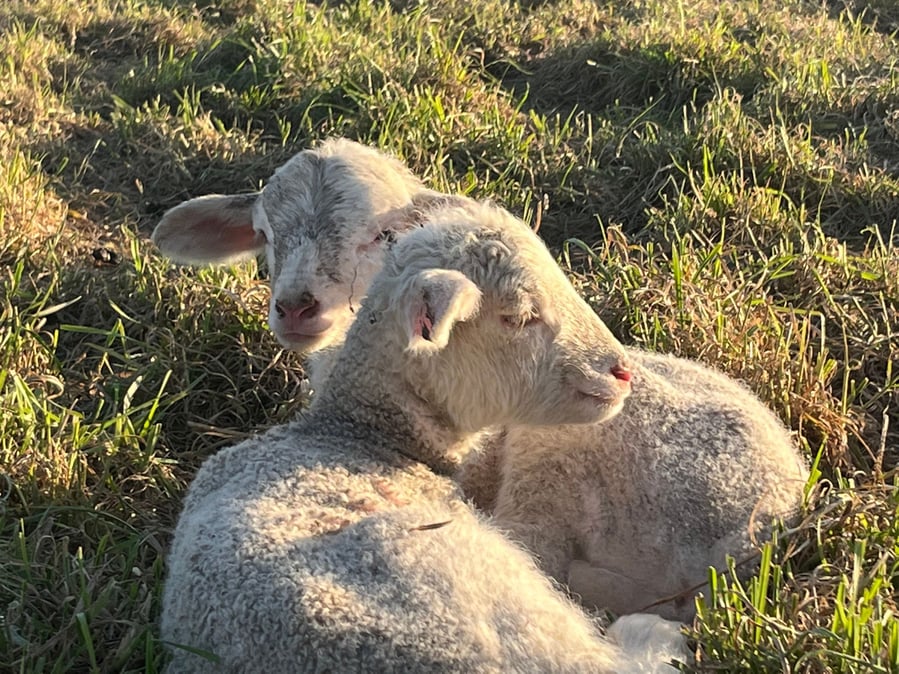
Photo: Two of Tom Brown's young lambs resting together in a grassy field.
He recalls one site that previously produced feed for dairy cows. Today, the site instead supports sheep grazing for meat production in collaboration with a solar farm. From Tom’s perspective, the land is still part of the agricultural economy—it’s just playing a different role.
In this way, solar farms represent a temporary transition, not a disappearance of agriculture, all while generating electricity for hundreds of local homes and businesses. And after the solar farm is decommissioned, these sites are returned to agricultural land.
That said, transparency matters. When solar farms are labeled as agrivoltaics sites but are maintained solely by mowing, frustration is understandable. True solar grazing, he says, depends on land stewardship being a real priority.
Better Land, Better Relationships
Does solar grazing improve soil and vegetation? It depends on how a site is built, what’s planted afterward, and how seriously stewardship is taken. But when the land is managed intentionally, Tom believes solar grazing can help improve the soil, so when the solar farm is deconstructed, the land will once again be ready to farm.
He also emphasized that solar farms with active grazing generally receive fewer complaints because it demonstrates the land is being taken care of and used productively.
Looking forward, Tom is also planning to introduce several beehives and beekeeping operations on a Nautilus Solar site in Colorado. The future of solar energy isn’t just panels, but pastures, pollinators, and landscapes that continue to produce.
To learn more about agrivoltaics, check out our related articles:
Grapes + Solar Panels: Vineyard Farming in Grand Junction
More Than Just Solar Power – We’re Helping Make American Farms Viable