

Grapes + Solar Panels: Vineyard Farming in Grand Junction
.png)

.png)
December 9, 2025
Set amid the scenic landscape of Colorado’s western slope is the CSU Western Colorado Research Center (WCRC) Orchard Mesa. About 20 minutes from Grand Junction, this beautiful campus is home to 80 acres of farmland used for the express purpose of researching the soil and the growth of peaches, cherries, apples, grapes, and more.
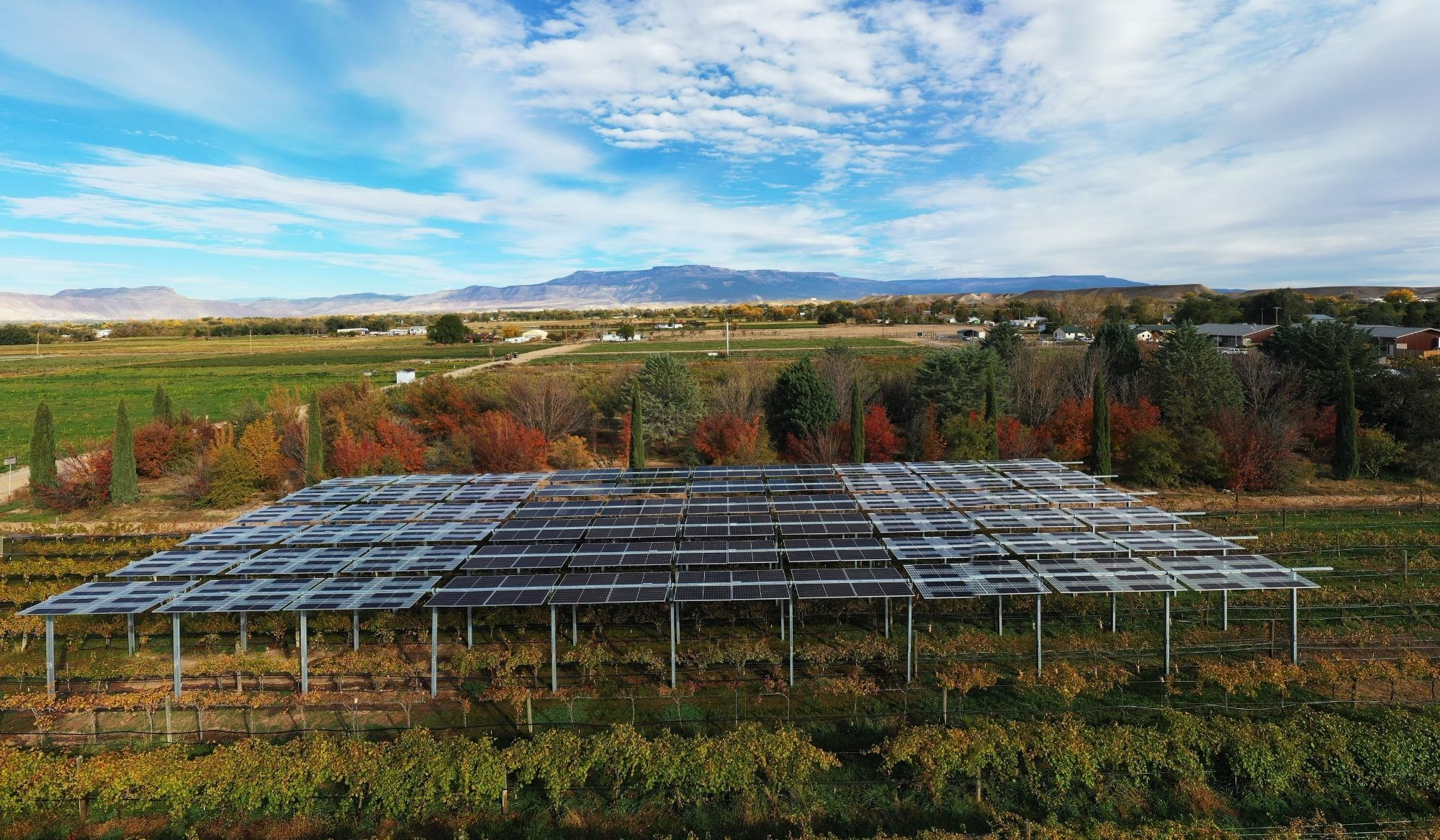
Photo Credit: Douglas Dean, Colorado State University Extension, https://photos.app.goo.gl/AucD4aEhqb3jNTLPA
That isn’t all though.
Over the past eight years, CSU's Dr. Horst Caspari, Professor of Viticulture and one of Colorado’s leading experts in grape cultivation, has been working to pioneer a project dedicated to the coexistence of vineyard agriculture and solar panels. This fall, they installed an 85.2 kW solar array, towering 14 feet above the mature grapevines on the campus.
We sat down with Dr. Horst Caspari and got the inside scoop on his research and thoughts about the coexistence of solar and agriculture, also known as agrivoltaics.
What is Agrivoltaics?
Agrivoltaics refers to the dual-use of land for both farming and solar energy generation. This is not just limited to growing crops. Many farmers also graze livestock under the panels, produce hay, or harvest honey.
This growing industry lets both needs coexist, often with mutual benefits. Further, it helps address land use concerns and some challenges farmers face during their growing seasons.
Vineyard Agrivoltaics at CSU WCRC Orchard Mesa
The solar installation at CSU Orchard Mesa joins a growing movement of agricultural solar farms in Colorado. Specifically designed for grape production, the solar array is made up of six rows of opaque and semi-transparent solar panels.
The system primarily serves the campus’s own energy needs, expected to supply 35–40% of its annual consumption, or roughly 165 MWh per year.
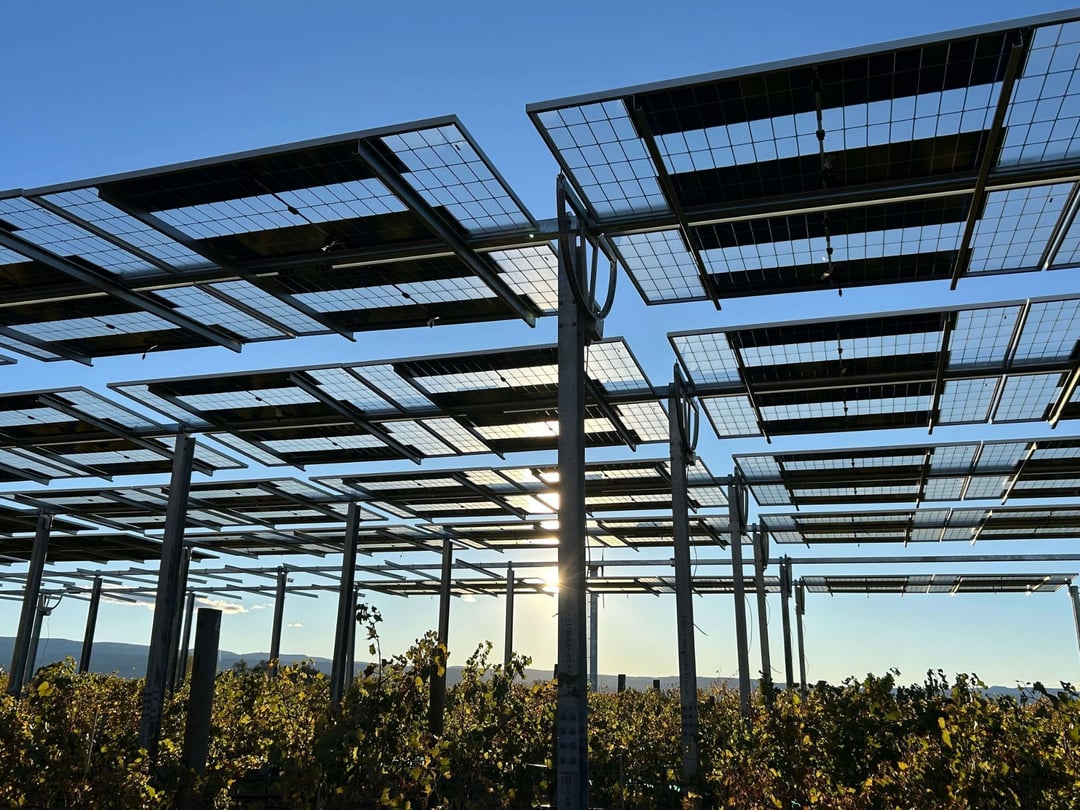
Photo Credit: Dr. Caspari Horst, CSU WCRC Orchard Mesa, https://photos.app.goo.gl/RhgPzb4C9cYzeDCe6
This solar system includes dynamic tracking capabilities, making this project just that much cooler. The panels can be tilted and controlled by campus researchers to optimize sunlight for the grape vines, then shifted back to maximize solar generation.
The semi-transparent panels allow 53% of sunlight to pass through, promoting plant growth. The opaque panels are not transparent but are instead bifacial, capturing light from both sides. Opaque panels generate more energy than semi-transparent panels but they can also prevent sunlight from reaching the plants.
The different types of panels and tracking technology make this system perfect for experimentation. Dr. Caspari plans to experiment with tracking throughout the day to strike an optimal balance between energy production and grape production. As Dr. Caspari explains, “We want to figure out if we need that extra light, or if we can manipulate the opaque panels to bring in light at critical times.”
The project is a living laboratory, testing different variables to find the right balance for both crops and kilowatts.
Addressing Land Use and Water Concerns
Agrivoltaics is compelling because of its potential to address concerns about agricultural land use. A common fear is that productive farmland will be lost to solar developers or degraded over time. This is a valid concern.
Dr. Caspari also aware of these worries: “Agrivoltaics is exactly that idea—we don’t have to be either/or. We can do both.” In the case of the Orchard Mesa vineyard, the solar installation was built over a 34-year-old vineyard without removing a single grapevine. “We still have 100% of our cropping potential under those panels,” he notes, contrasting this with ground-mounted systems that inevitably take some land out of production for the lifetime of the solar farm.
The benefits of vineyard solar go beyond just land preservation. Shaded crops can require up to approximately 25% less water and retain more soil moisture during summers. This is a critical advantage in the dry, drought-prone Colorado River basin.
The panels also provide warmer night temperatures, reducing the risk of frost damage, which is a persistent challenge for Colorado fruit growers.
“Frost is our number one issue,” says Dr. Caspari. “If I can get two or three degrees of protection from that system without running my wind machine, that’s massive.”
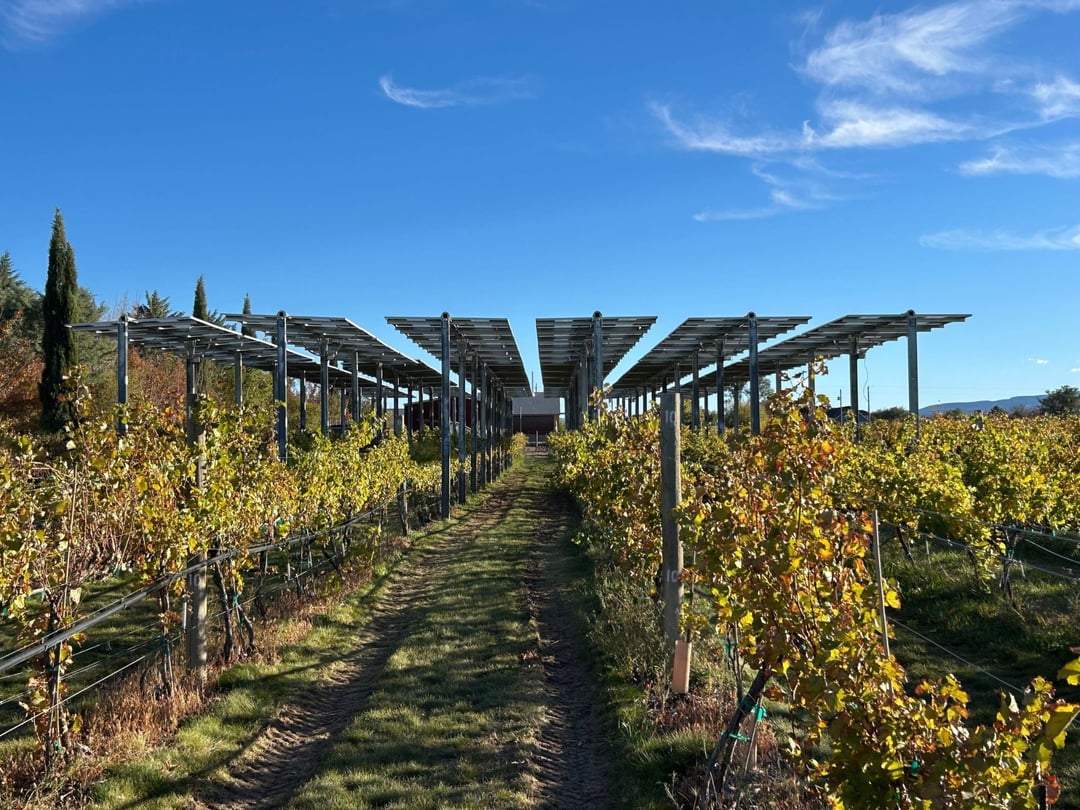
Photo Credit: Dr. Caspari Horst, CSU WCRC Orchard Mesa, https://photos.app.goo.gl/3pefjXAghqrSDj5H6
Room for Growth
Despite its innovative promise, agrivoltaics remain a niche within the broader solar industry. Dr. Caspari attributed this to a lack of awareness and skepticism about its economic viability. “There are benefits that people do not know about. When asked what holds people back in California, I said ignorance.”
Even in California, a state known for its progressive energy policies, agrivoltaics is barely on the radar. Colorado, Massachusetts, and a handful of other states are leading the way. Nevertheless, the overall scale remains small.
Currently, agrivoltaic solar projects make up less than 5% of solar capacity in the United States.
Looking Forward: Farming and Solar
Dr. Caspari was particularly passionate about bifacial vertical solar panels. These are often called solar fences. They can be installed along farmland or between greenhouses, capturing reflected sunlight without sacrificing valuable growing space. This technology could open new doors for farmers, making it easier to adopt solar in the coming years.
Looking forward, Dr. Caspari sees agrivoltaics as a game-changer at the CSU Western Colorado Research Center. The initial benefits of the project are already starting to emerge. After rainfall, the ground under the panels retained moisture longer, and warmer nighttime temperatures under the panels helped extend the growing season and protect crops from frost.
The agrivoltaics project at CSU WCRC Orchard Mesa is more than just an experiment. It's a clear demonstration that agriculture and renewable energy can successfully work together, showcasing the advancement of clean energy in Colorado. This vineyard solar farm is a success story that shows we can truly do both.